
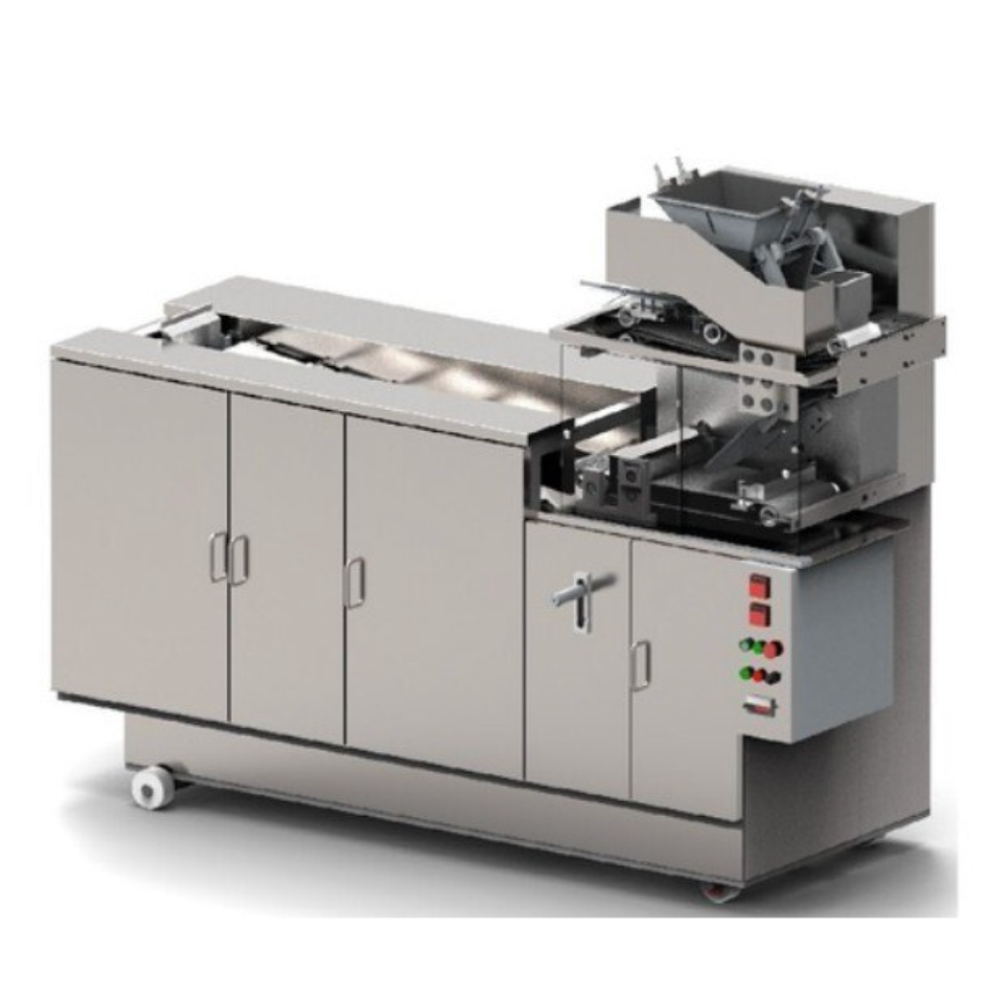
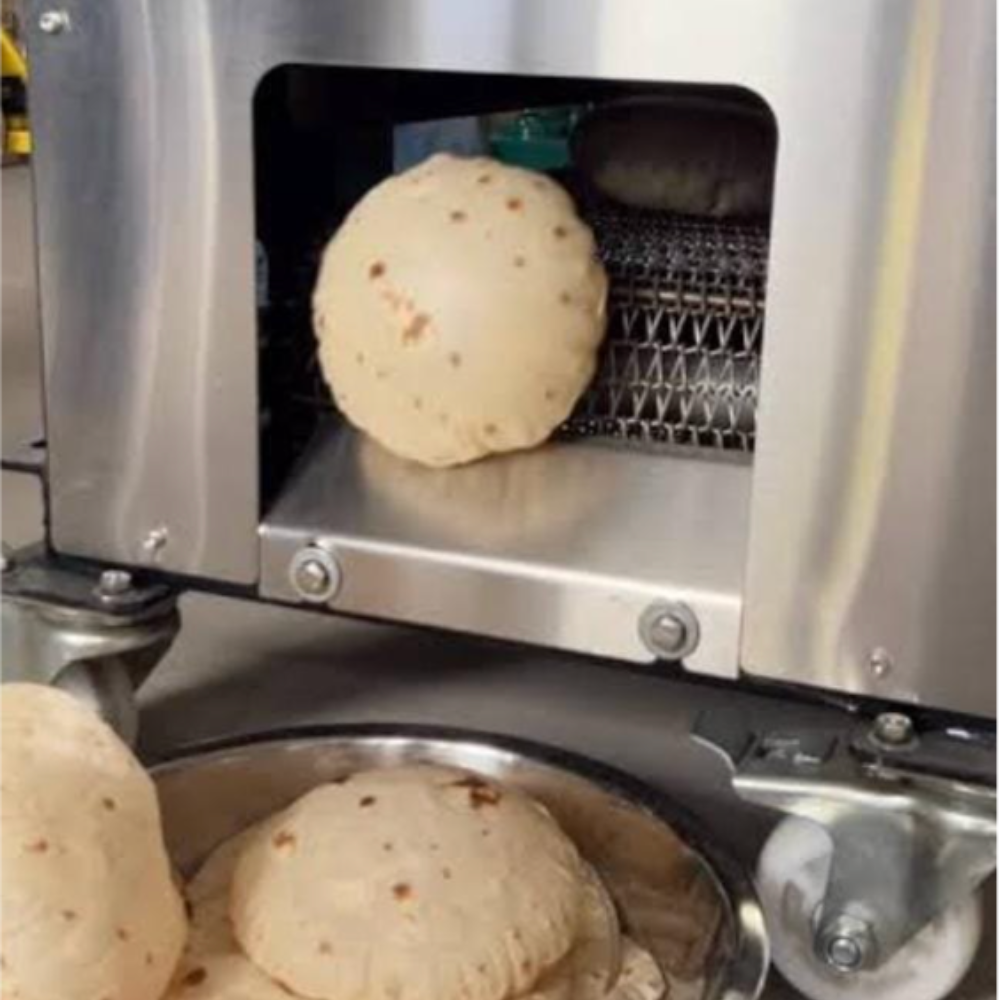
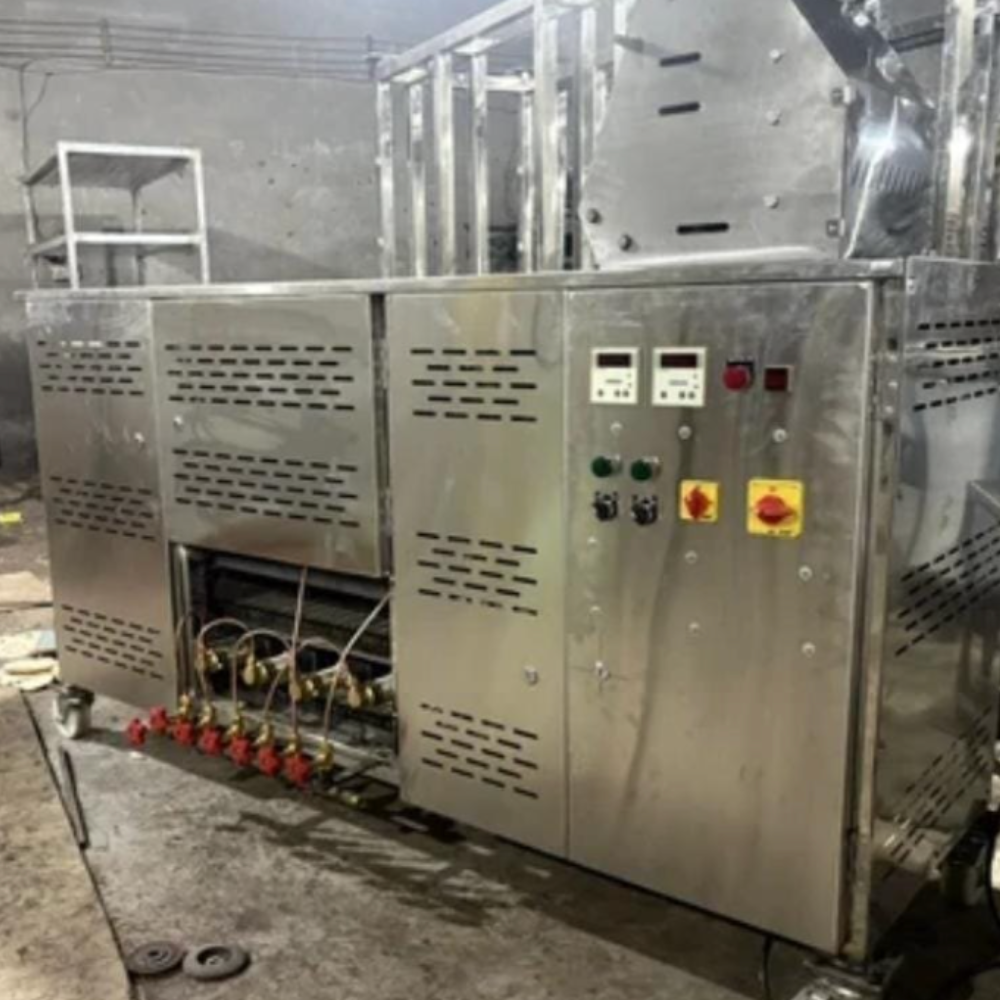
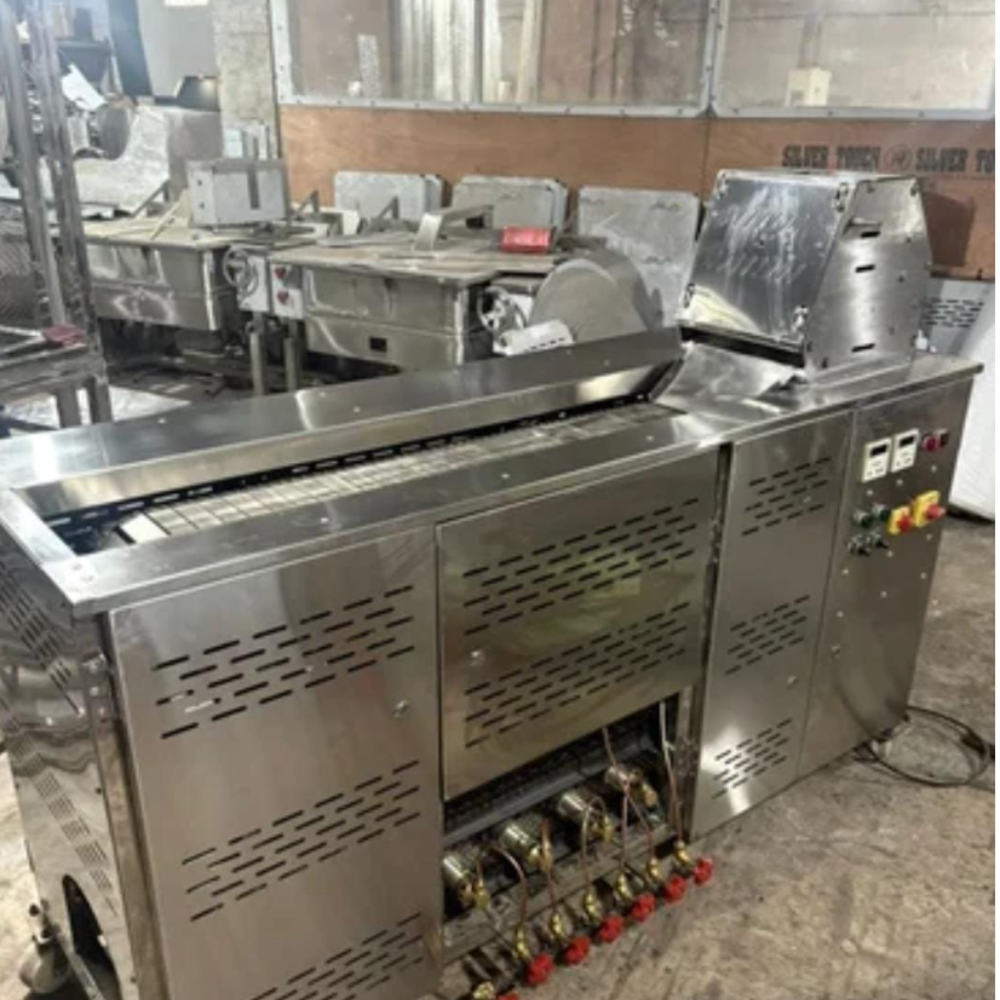
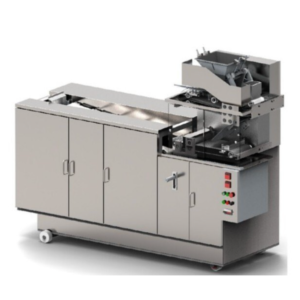
A chapati making machine automates roti production, using dough balls to press and cook perfectly round, uniform chapatis with consistent size, thickness, and softness, ideal for commercial settings like hotels and canteens by saving labor and time through features like automatic dough handling, hydraulic pressing, and conveyor baking, running on gas or electricity. Key Features & Process
- Dough Handling: Automatically mixes, kneads (or uses pre-made dough balls), and portions dough into consistent sizes.
- Pressing: Hydraulic or mechanical pressing creates uniform, flat, and perfectly round dough discs.
- Baking: Features dual-side heating plates or a three-layer conveyor system (Z-type) for even cooking, producing soft, light brown chapatis.
- Adjustability: Allows customization of chapati size (2-9 inches) and thickness (1-4mm).
- Construction: Built from food-grade stainless steel (SS 304) for hygiene and durability, with ceramic-coated plates for non-stick cooking.
- Power: Operates on electric motors for pressing and gas (LPG/PNG) or electric heating for baking, often with energy-efficient designs.
- Output: High-capacity models produce 500 to 2000 chapatis per hour, depending on the machine.
Ideal For
- Hotels & Restaurants
- Catering Services
- Industrial Canteens & Mess Halls
- Food Processing Units
- Temples & Gurudwaras (for large-scale feeding)
Benefits
- Efficiency: Significantly reduces manual labor and production time.
- Consistency: Ensures uniform quality, size, and texture in every chapati.
- Hygiene: Stainless steel construction and automated process meet high food safety standards.
- Cost-Effective: Saves on manpower and offers low operational costs.
Reviews
There are no reviews yet.